



































Carbon credits that generate revenue and deliver impact
We turn emission reductions into recurring revenue under global standards, with real climate and community outcomes.
Carbon credit trading made fully traceable
Internal supply, transparent pricing, and a ten-year delivery record across every major voluntary standard.

Many credits come from projects we build ourselves
This means first access to supply and full project knowledge behind every credit.

Every trade priced transparently
You see the full price and our margin before you commit. Standard practice on every trade

Never defaulted, not once
We have honored every contracted trade for ten years, including when the market moved against us.

Impact stories that hold a premium
For credits where we hold exclusive rights, the trade carries a verified impact story and SDG outcomes.
The agreements behind a carbon credit trade
The right agreement depends on where the credits come from, when they are delivered and how they will be used.

MOPA (Mitigation Outcomes Purchase Agreement)
An agreement for purchasing mitigation outcomes from a host country under Article 6 of the Paris Agreement for international transfer as ITMOs. It defines the purchase price, volume, delivery terms, authorization, and corresponding adjustments, where applicable.

ERPA (Emission Reductions Purchase Agreement)
A legally binding contract under which a buyer agrees to purchase specified emission reductions or carbon credits from a seller. It defines delivery schedules, pricing, payment terms, and the obligations of both parties.

Forward agreement
An agreement to buy or sell carbon credits at a pre-agreed price for delivery at a specified future date. It helps buyers secure future supply and sellers manage price and demand uncertainty.

Offset agreement
An agreement governing the purchase and use of carbon credits to compensate for greenhouse gas emissions. It specifies the quantity, quality, eligibility, and transfer or retirement arrangements for the credits.
Solving the trust problem in carbon credits trading
We help buyers and sellers avoid unreliable partners, poor-quality credits and unclear pricing.

In the OTC market, defaults are common. We absorb losses to honor contracted prices, even when the market moves against us.

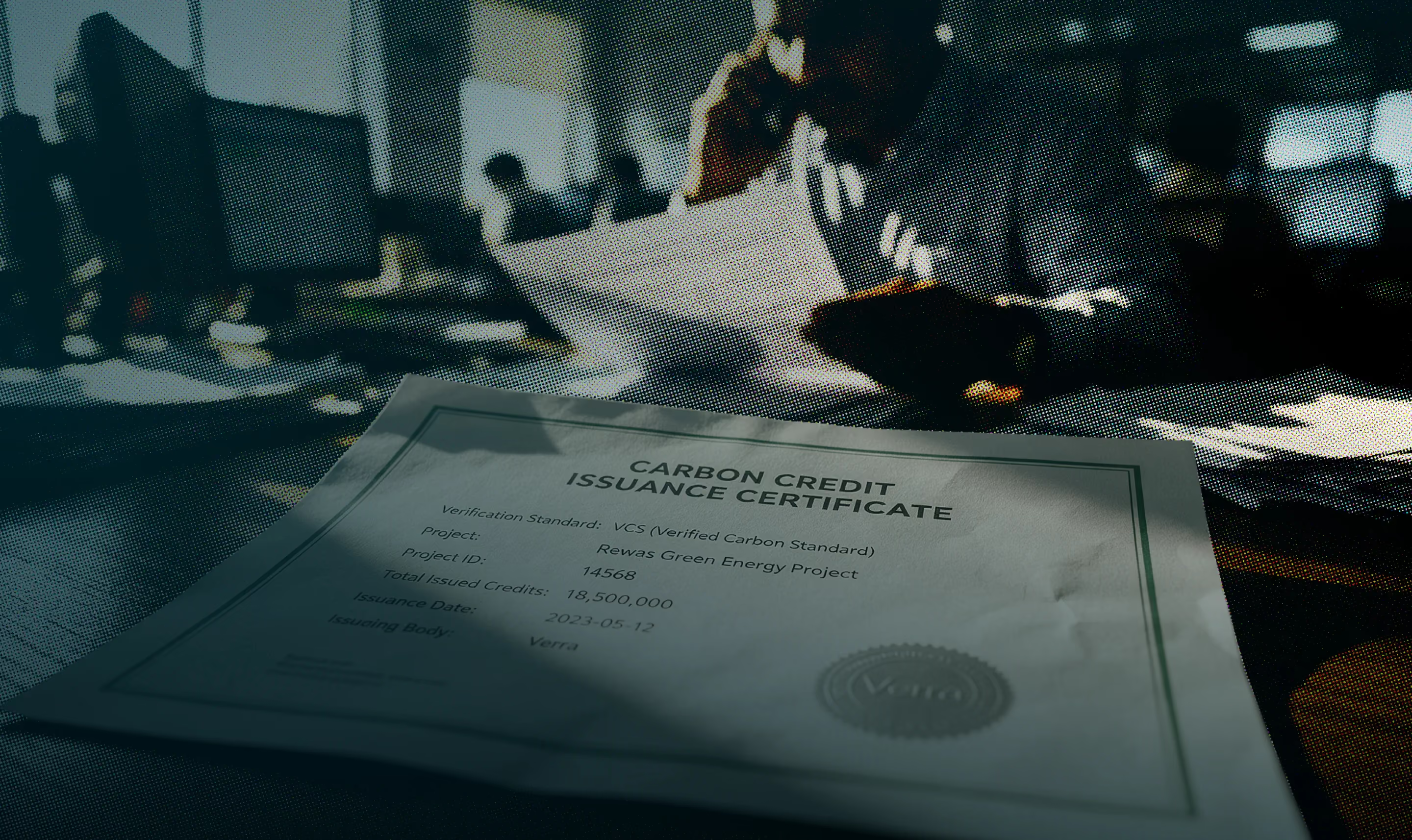
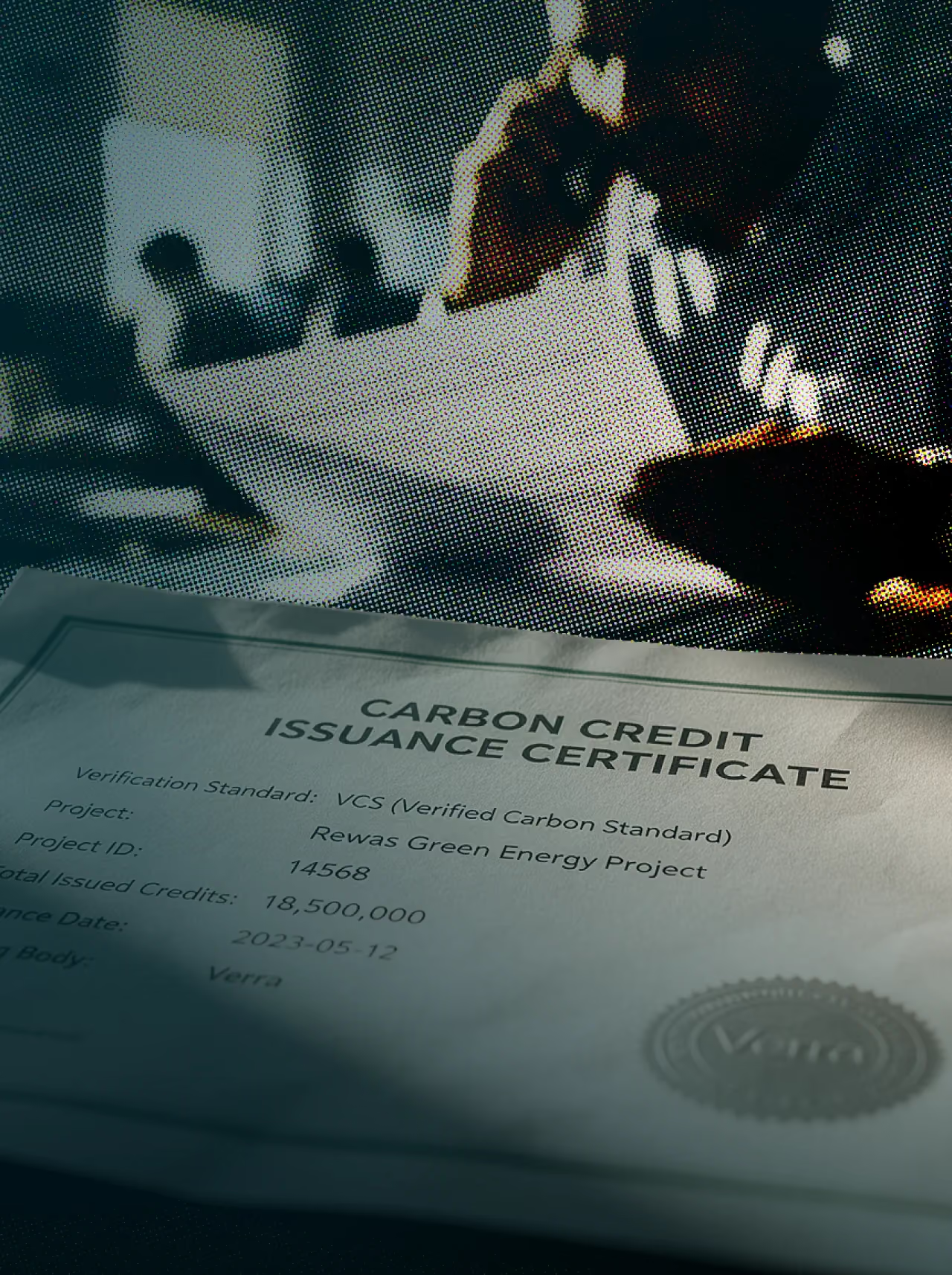
Every credit we trade can be traced to a registered project, and a documented set of outcomes.

We show the full margin on every trade before you sign. No hidden prices.
How we manage your carbon credit
We take care of the search, pricing, transaction and delivery, giving you one clear path from requirement to credits.
We scope what you need: credit type, standard, project preference, volume, and timeline.
We recommend the right methodology based on your project, standard and credit potential.
We develop the data required for validation and registration.
An accredited third party reviews the project against the selected standard and methodology.
We manage registration with the selected registry and move the project towards issuance.
We establish and manage the monitoring, reporting and verification process needed to track project performance.
We coordinate verification and support the project through to the issuance of carbon credits.
We support the sale or retirement of credits, with transparent reporting throughout the process.
What you receive from a carbon credit trade

A selection of credits matched to your standard, project type, and co-benefit requirements.

Transparent breakdown of price and margin on every credit before you commit.

Registry listing, verification body and co-benefits for every credit traded.

Confirmed transfer of credits to your registry account on the agreed timeline.

Documentation confirming credit retirement against your stated targets.

Pricing trends, market shifts, and portfolio recommendations for future procurement cycles.
Carbon credit trading shaped by your industry
Credit demand, quality requirements, and compliance context differ by sector. We trade with the depth each industry requires.













Straight answers on how to buy carbon credits
Start with what buyers and sellers ask most about legitimacy and carbon credit price, then bring us your trade.
A carbon credit generally represents a verified reduction, avoidance, or removal of one tonne of carbon dioxide equivalent (CO2e), which can be traded or retired against an emissions claim.

Credits are typically generated by projects (such as renewable energy, forestry, or waste-to-energy initiatives) that reduce or remove emissions, following a recognized methodology and verification process.
Project development and advisory support for carbon credit generation is a stated area of focus, though the specific standards and methodologies used should be confirmed for your project type and location.
Legitimacy generally depends on independent verification against a recognized carbon standard and registry; you should verify the specific standard and registry used for any credits before relying on them.
Carbon credits can generally be retired to support voluntary offset claims, but how this fits your specific reporting or regulatory obligations should be confirmed, as rules differ by jurisdiction and reporting framework.
A carbon credit is a tradable certificate representing one tonne of carbon dioxide-equivalent that has been reduced, avoided or removed from the atmosphere, independently verified against a recognized standard. Organizations buy credits to fund climate action and offset emissions they cannot yet eliminate.
Avoidance (or reduction) credits represent emissions prevented from being released, for example renewable energy displacing fossil power. Removal credits represent CO2 actively taken out of the atmosphere, for example afforestation, biochar or enhanced rock weathering. Removals, especially durable ones, are increasingly valued for reaching net zero.
Look for a credible standard, genuine additionality, a conservative baseline, robust MRV, permanence (for removals), no double counting, and real co-benefits. We develop and select credits with these integrity criteria in mind.